AI-Enhanced Development
How AI-Enhanced Development Actually Accelerates Software Delivery (Without Compromising Quality)
Getting software built faster sounds great. Getting it built faster and then spending months untangling it is a much less exciting proposition.
For a business investing in a website, client portal or custom application, speed matters when the finished product is useful, dependable and ready to support real work.
At Clickative, our approach combines AI-assisted development with more than 12 years of experience. That combination shapes how we move from an initial idea to a finished product, and how we decide which shortcuts are worth taking.
The opportunity reaches well beyond typing code faster. It extends to exploring ideas, developing interfaces, investigating problems and refining the result.
- 12+ Years of development experience
- 4 Stages: imagine, design, build, refine
- FREE Concept proposal before you commit
01What “Faster” Means
First, Understand What “Faster” Actually Means
Software delivery includes discovery, design, implementation, review, testing and launch. A faster coding step only helps the overall timeline if the work remains straightforward to review and use.
- Discovery
- Design
- Implementation
- Review
- Testing
- Launch
AI speeds up the implementation Review and testing stay just as thorough
DORA’s 2025 research describes AI as an amplifier of an organisation’s existing strengths and weaknesses. The surrounding development system matters as much as access to the tools.
That makes the useful question: where can AI remove effort while preserving the checks that make the work dependable?
For us, the answer starts with a structured process. We bring AI into the work alongside decisions about architecture, user experience, security and performance. Those decisions give the faster implementation a clear direction.
02Imagine
Give The Build A Clear Destination
When we work with a client, the starting point is the business behind the project. What needs to happen? Who needs to do it? What is getting in the way today?
For an enquiry website, the priority might be helping visitors understand an offer and take the next step. For an internal application, it might be replacing a cumbersome sequence of spreadsheets and manual updates.
These questions define very different products. Our initial planning connects the goal with the structure needed to support it:
Users
Who the product serves and what they need to accomplish.
Workflows
The steps from a starting point to a useful outcome.
Data
The information those workflows depend on.
Connections
Existing tools or services involved.
Scope
What belongs in the agreed project.
AI supports research and exploration here. Its suggestions become material for consideration, with the business requirements guiding our decisions.
A well-defined destination gives every later design and development choice something concrete to answer to.
03Design
Make Ideas Easier To Evaluate
It is difficult to give useful feedback on something that exists only in a written brief.
Our free concept proposal gives clients visual directions and functional ideas to consider before committing. During the build, regular previews keep the conversation connected to what is taking shape.
When we design an interface, we consider the relationship between appearance and behaviour. The layout, navigation, content and interactions all contribute to whether someone can use it comfortably.
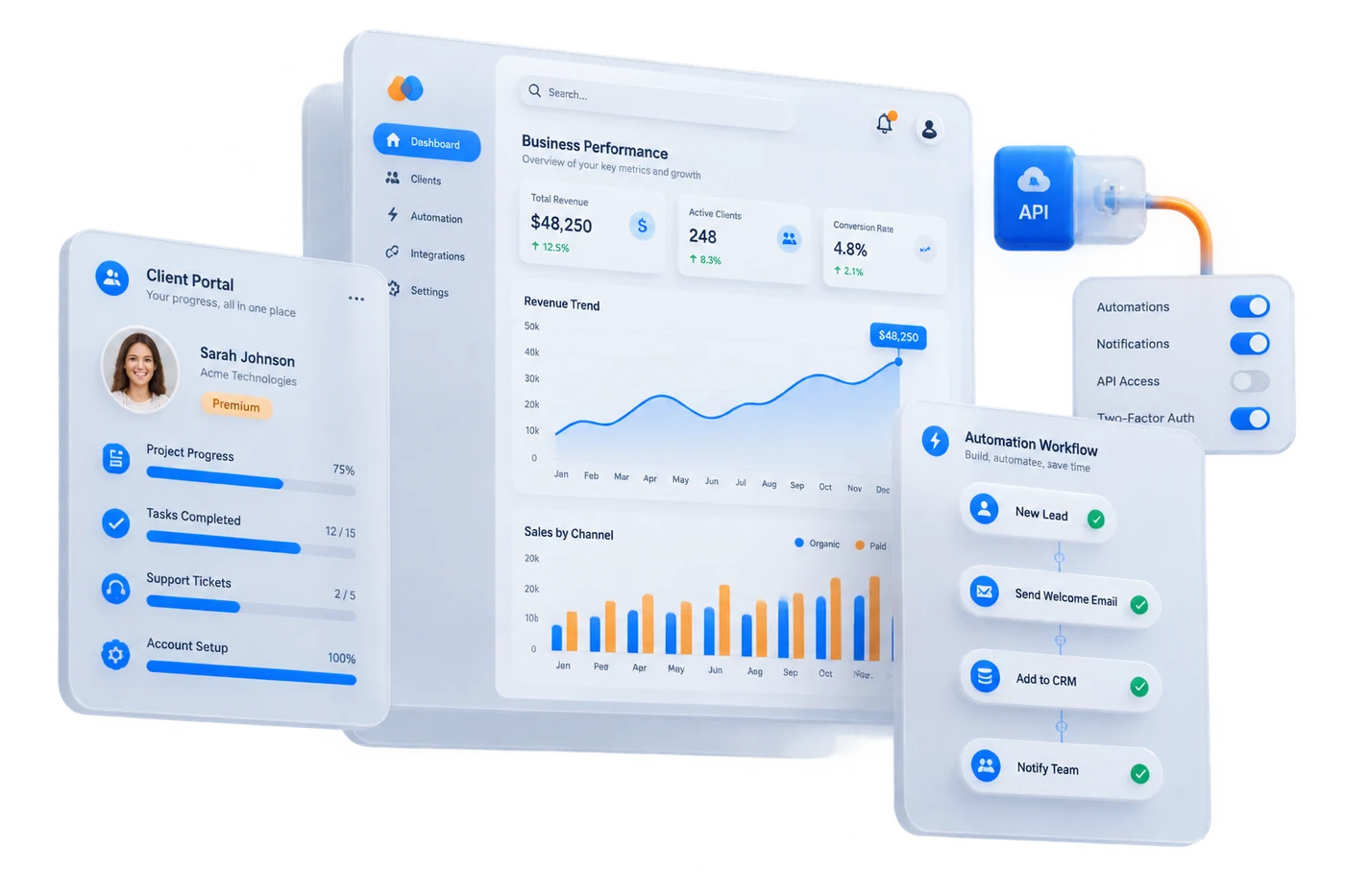
For example, a dashboard needs more than attractive charts. The important information needs prominence. Filters need to make sense. The route from noticing a problem to acting on it needs thought.
AI-assisted exploration supports quicker iteration, while our design judgement determines what suits the brand and the people using it.
The value of an early preview is the decision it helps you make.
That decision might confirm the direction, reveal a missing requirement or prompt a useful change before more work depends on it.
04Build
Accelerate The Work Around The Decisions
Once the direction is clear, AI becomes part of implementation: drafting code, supporting debugging and helping explore possible solutions.
DORA’s analysis of developer experiences identifies repetitive implementation and getting started on tasks as areas where AI provides useful assistance. It also highlights the verification work that accompanies those gains.
At Clickative, our developers remain responsible for the technical choices underneath the interface. Here is how those responsibilities fit together:
| Area | AI-Assisted Contribution | Engineering Responsibility |
|---|---|---|
| Interfaces | Drafting components and variations | Reviewing behaviour, usability and consistency |
| Application logic | Suggesting implementations | Checking business rules and architecture |
| Integrations | Assisting with connection code | Verifying API requirements and failure handling |
| Debugging | Proposing explanations and changes | Establishing the cause and checking the result |
| Testing | Drafting test cases | Checking that they validate the intended behaviour |
A useful draft gives a developer something concrete to examine. Acceptance still depends on whether it fits the project.
GitHub’s guidance on reviewing AI-generated code makes the same practical distinction: check functionality, context, code quality and dependencies, with human oversight throughout.
The resulting workflow includes both generation and verification. Keeping both visible is central to making the time savings useful.
05Our Technology Stack
Understand The Whole System
Our technical work spans frontend interfaces, backend logic, databases, APIs, hosting and deployment. Each layer affects how the others behave.
Consider a form that submits information to a business system. The visible interface needs clear labels and feedback. The application needs rules for processing the submission. The receiving service needs the right data in the right format.
- InterfaceClear labels and feedback
- ApplicationRules for the submission
- Receiving serviceThe right data, the right format
That is why architecture belongs in the conversation about delivery speed. A change is easier to assess when the responsibilities of each part are clear.
It also explains why visual validation alone is insufficient. As MDN’s form guidance explains, browser-side checks support the user experience, while server-side validation is also necessary because browser checks can be bypassed.
Our focus on the underlying system connects the interface people see with the logic and data that make it work.
06Refine
Give Quality Its Own Attention
Our process includes refinement because a working first version still needs examination.
We review and test what we deliver, then tune the details that affect the finished experience. AI supports testing and debugging, alongside the security review, performance work and judgement described in our development approach.
The questions vary with the project. A useful quality checklist includes:
Functionality
Does the feature behave as agreed?
Failure handling
What happens when information is missing or a service is unavailable?
Security
Are inputs, permissions and sensitive data handled appropriately?
Usability
Are instructions, feedback and next steps clear?
Responsive behaviour
Does the interface remain usable across relevant screen sizes?
Maintainability
Can the code be understood and changed?
Performance also needs specific attention. Images, fonts, scripts and loading behaviour all affect the experience, as Google’s web performance guidance documents.
The purpose of refinement is to examine the product beyond the first successful interaction. A polished demo is one useful milestone; dependable day-to-day use asks more of the implementation.
07What This Looks Like
A Client Portal
Consider a hypothetical business that wants customers to submit requests, upload documents and check progress through a portal.
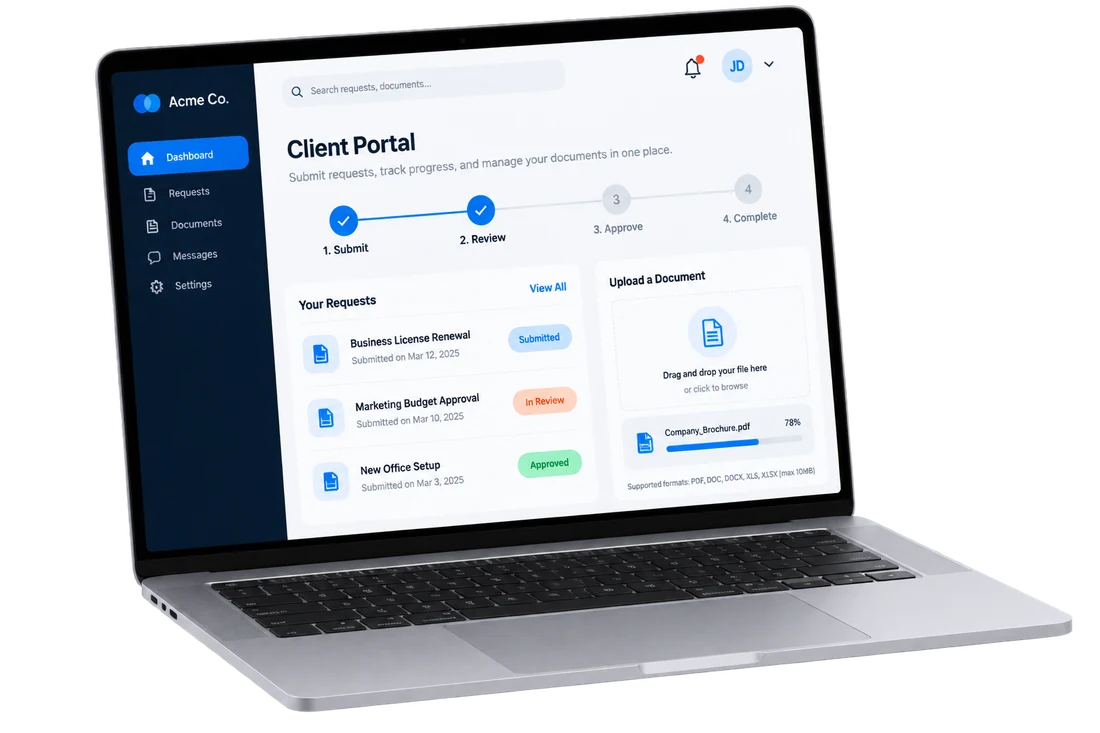
The initial feature list sounds straightforward. Looking more closely reveals important decisions:
-
Before Implementation
Establish which users can see which requests, what information each submission needs and how progress is represented.
-
During Design
Make the request flow understandable, with clear feedback about what has been submitted and what remains to do.
-
During Development
Connect the interface, application rules and stored information. AI-assisted drafts support implementation within that structure.
-
During Refinement
Examine situations such as an interrupted upload, an incomplete submission or an attempt to access another customer’s request.
The example illustrates where acceleration and quality meet. There is repeatable work to move through efficiently, alongside business rules and technical boundaries that require deliberate attention.
The aim is to spend less effort producing routine implementation and more focused effort evaluating whether the complete workflow works properly. For the client, progress means seeing a usable product take shape and having clear opportunities to influence it.

08After Launch
The Benefits Continue After Launch
Delivery speed also matters when the business needs its next change.
A new feature touches existing decisions: how information is stored, where rules live and how the interface communicates with the rest of the application. Understandable structure gives that work a clearer starting point.
Maintainability is part of our approach for this reason. The first release should support an ongoing product, with room for improvements as requirements evolve.
For businesses with several ventures, shared infrastructure and components offer another opportunity, while each brand keeps its own identity.
That continuity also applies to the working relationship. Our ongoing development partnership provides a way to keep design, features, improvements and new ideas moving within agreed priorities and scope.
Put AI To Work On Your Next Project
AI-enhanced development earns its place through useful work: helping move an idea towards a product that looks right, behaves properly and supports the business behind it.
Our contribution is the combination of that assistance with experienced design and engineering, carried through Imagine, Design, Build and Refine.
Have a website that needs an upgrade, an application idea or a workflow ready for improvement?
Tell us what you are building. We will put together a FREE concept proposal with visual directions and functional ideas, so you can explore the possibilities before committing.